Hi there,
Heart disease killed 683,000 Americans in 2024. It's been the leading cause of death in this country for over a century. In the US, it accounts for roughly one in five deaths. Globally, cardiovascular disease kills one in three.
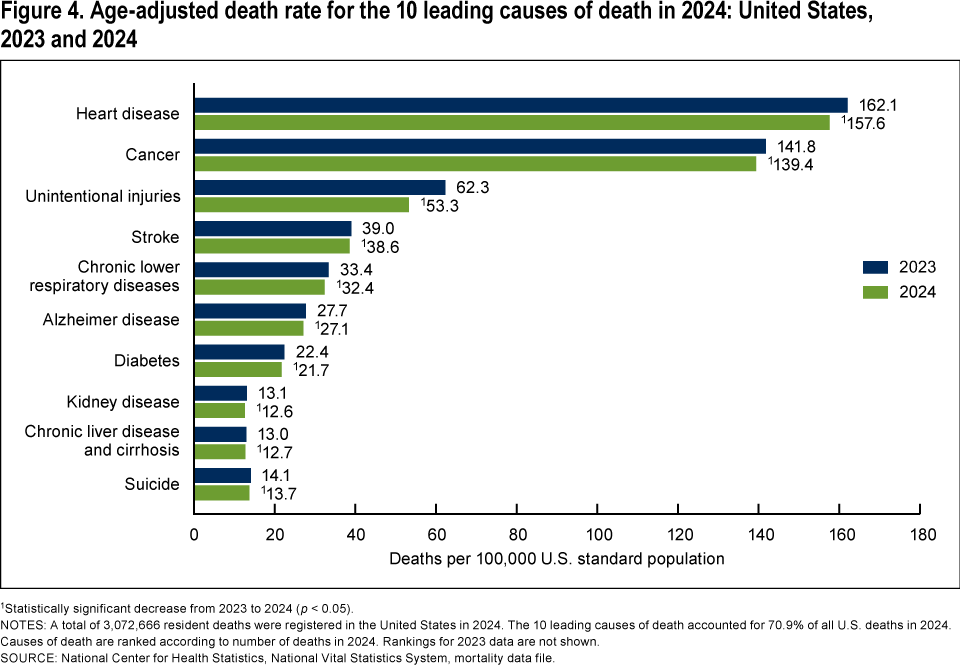
We spend a lot of time on cardiovascular health at Based Health, and people sometimes ask why. The answer is simple: it's where the math points. Heart disease is the highest-impact health problem most people face, the testing that catches it early is still wildly underused, and we have genuinely effective tools to do something about it. When something scores high on all three of those dimensions (impact, neglect, and solvability) it deserves serious attention.
That's why the new guidelines released in March matter. Eleven medical organizations led by the American College of Cardiology and American Heart Association published updated recommendations for managing cholesterol and preventing cardiovascular disease. This is the first major update since 2018, and it represents a real philosophical shift in how mainstream medicine thinks about prevention.
The short version: they're finally catching up to what the research has been saying for years.
What changed
Risk assessment now starts at 30. The old guidelines didn't recommend evaluating cardiovascular risk until age 40. The new ones drop that to 30, using an updated risk calculator (called PREVENT) built on data from 6.6 million people. It calculates 30-year risk, not just 10-year, and LDL-lowering therapy can now be considered even at borderline risk (3-5% on the PREVENT score).
Specific LDL cholesterol targets are back. Previous guidelines stepped away from clear numeric targets in favor of percentage reductions. The new ones bring back concrete numbers: under 100 mg/dL for borderline or intermediate risk, under 70 for high risk, and under 55 for very high risk.
New screening recommendations. Everyone should get their Lp(a) measured at least once. About 1 in 5 people carry elevated Lp(a), a genetically determined risk factor: levels at or above 125 nmol/L are associated with 1.4x increased risk, and 250 nmol/L or above roughly doubles it. CAC scans are recommended for men over 40 and women over 45 with borderline or intermediate risk.
Treat earlier, more aggressively. The guidelines explicitly say: treat dyslipidemia earlier to reduce lifelong risk from prolonged exposure to harmful lipoproteins. Lifestyle optimization should start in youth. For young adults with LDL at or above 160 mg/dL, or a strong family history of premature cardiovascular disease, pharmacotherapy should be considered early.
Why earlier matters
Cardiovascular risk accumulates over decades, quietly, starting long before symptoms show up.
A meta-analysis found that for every 38 mg/dL reduction in LDL cholesterol, the risk of major cardiovascular events drops 12% after one year, 20% after three years, and 29% after seven. The benefit compounds. And Mendelian randomization studies (which look at people with genetically lower LDL levels across their entire lives) show a 54% reduction in coronary heart disease for the same 38 mg/dL difference.
The longer you live with lower LDL, the more protection you accumulate. Every year of delay is a year of accumulated arterial damage you can't get back.
Where the guidelines still fall short
These guidelines are a genuine step forward. But from our perspective, they're still not proactive enough.
ApoB should be central, not optional. This is the big one for us. At Based Health, we lean heavily on apolipoprotein B as a primary metric for cardiovascular risk. The guidelines themselves acknowledge that "ApoB measurement helps identify adults with residual elevated lipoprotein-related risk that may be underestimated by the standard lipid profile alone." That's the guideline committee saying a standard panel isn't enough. And yet they still frame ApoB testing as something that "may be reasonable" rather than making it standard. We think that's a missed opportunity. ApoB is a more accurate measure of atherogenic particle burden than LDL-C, and every client at Based Health gets it as part of their baseline.
The age and LDL thresholds are still too conservative. The guidelines only trigger action at LDL of 160 mg/dL for a 30-year-old. That's the 90th percentile. We think comprehensive lipid testing (including apoB and Lp(a)) should happen even earlier, and intervention thresholds should be lower.
It's still framed as "who needs medication." We think the better question is: what's your actual risk profile, and what's the full toolkit to address it? Nutrition, exercise, sleep, and stress management as the foundation, with medication as a powerful tool when lifestyle optimization isn't enough on its own.
Even the chair of the guideline writing committee, Roger Blumenthal of Johns Hopkins, acknowledged in an accompanying editorial that future updates will likely adopt LDL under 55 as a target for a broader range of patients, including those with moderate atherosclerosis found on imaging.
The science is clear. The direction is right. We just think the pace needs to match the urgency.
How we think about cardiovascular risk
At Based Health, we look at the full picture: labs, genetics, lifestyle, family history, body composition, and how they all interact. The goal is to understand your risk profile with precision, early, when you have the most time to act on it.
Lifestyle comes first: nutrition, training, sleep, stress. Pharmacology is a tool we bring in when the data supports it. But the foundation is always knowing exactly where you stand and building a plan around that.
What this means for you
If you're 30 or older and haven't had a comprehensive lipid panel that includes apoB and Lp(a), these new guidelines are one more reason to get it done. And if you're younger than 30 but have a family history of heart disease, don't wait for the guidelines to catch up.
The earlier you know your numbers, the more time compounds in your favor.
Tyler